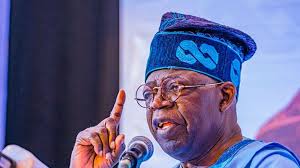
The Nigerian President, Bola Tinubu has directed a Federal Executive Council (FEC) committee to implement urgent measures that will further reduce food prices across the country.
The Minister of State for Agriculture and Food Security, Senator Aliyu Sabi Abdullahi, announced the directive on Wednesday, in Abuja, during a capacity-building workshop for journalists covering the Senate.
He explained that the move would be achieved through the safe passage of agricultural produce and commodities across key transport routes nationwide, thereby cutting down logistics costs and reducing market prices.
According to the Minister, “I can say it on good authority, that the President has given a marching order, which a Federal Executive Council committee is already handling.
The Minister explained that the government is working to ease the burden of transportation costs that make food unaffordable for many Nigerians.
Senator Abdullahi said; “We are aware, and I’m sure as media, you are also aware, there are routes through which commodities are taken before they are delivered. If you know the amount of money that is being spent, you can now understand why those commodities have to be expensive at the point of delivery.
He however, said that government was working very hard and doing a lot to achieve this. ” TWe are doing quite a lot. But I’ve just given you a snippet because I felt we should look at that.”
Highlighting President Tinubu’s vision for food sovereignty, he noted that “the policy framework goes beyond food security to ensure sufficiency, affordability, accessibility, and proper nutritional content on a sustainable basis.”
New Programmes To Lower Food Prices
Senator Abdullahi further said that new programmes are also being rolled out to boost production and support farmers.
“We are having what you call the Farmer Soil Health Scheme. And that is ready for launch. We are just waiting for the date.” Senator Abdullahi said.
He explained that government was embarking on a comprehensive reform of the cooperative sector to mobilise resources, generate economic activity, and improve livelihoods.
According to him, “Mr. President has shown tremendous interest in the cooperative sector as a veritable tool for resource mobilisation, for economic activity generation, and to improve the livelihood of members.”
And you know the principle of cooperative is clear, is democratic, yet it is also very productive. And so we are reforming this. There’s a number of things we are doing there. And I will urge you, as a press corps, to consider forming a cooperative,” Senator Abdullahi told journalists.
Other speakers at the workshop, themed “Parliamentary Reporting: Issues, Challenges and Responsibilities,” included the Chairman of the Senate Committee on Media and Public Affairs, Senator Yemi Adaramodu; former Presidential Adviser on National Assembly Matters, Senator Ita Solomon Enang; and the Director General of the National Institute for Legislative and Democratic Studies (NILDS), Professor Abubakar Sulaiman.